


HOW IT WORKS
Medical assessment
The medical team assesses the patient's condition and determines whether the appropriate clinical criteria are met for safe remote monitoring.
Provision of a wearable device
The patient receives the appropriate wearable device and is instructed on how to use it, in accordance with the guidance provided by the responsible medical team.
Monitoring from home
After hospital discharge, the device supports the collection of the required data and their transmission to the project's digital platform.
Connection with the care team
Healthcare professionals can monitor the patient's progress in accordance with the established clinical protocol and intervene when this is considered necessary.
Evaluation of results
The results of the pilot implementation will be used to assess the effectiveness of the model and explore the possibility of its wider application.
Note for visitors. Participation in the programme, the selection criteria and the method of monitoring are determined exclusively by the responsible medical teams of the participating hospitals.
WHY IT MATTERS
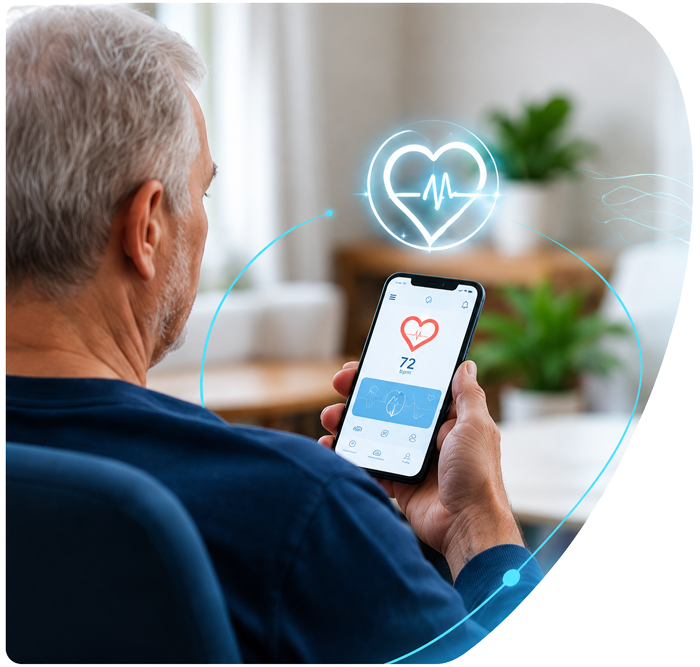
Care does not stop at the hospital door
The period following an Acute Coronary Syndrome is particularly important for the patient's recovery and safety.
Remote monitoring can support a smoother transition from hospital to home, providing patients and their families with a greater sense of security while improving continuity of care.
At the same time, the use of modern digital technologies can contribute to the more effective use of available hospital resources, cooperation between different healthcare units and the development of new models of care.
THREE CORE PRINCIPLES
A shared approach to better cardiac care
The three core principles of TeleHeartGuard reflect how the project brings together patients, technology and the participating medical teams within a shared model of care.